


Bob Burg On How To Be A Go-Giver And Get Your Customer To Know, Like, And Trust You
Short answer
Bob Burg's Go-Giver idea is to shift your focus from getting to giving, which he defines as constantly providing value to others. People don't buy from you because you need the money; they buy because they believe it's in their best interest.
He says people do business with, and refer business to, people they know, like and trust. Selling, in his words, is finding out what the other person wants, needs or desires and helping them get it.
Key takeaways
- Value is in the eyes of the beholder. What you think is valuable may not be what your audience sees as valuable, so give them what they value.
- Sell with people and for them. Bob says selling is something you do with someone and for someone, and pushing people into things they don't want or need is being a con artist.
- The tools aren't the relationship. People don't do business with Twitter or LinkedIn; they do business with people they know, like and trust.
- Ask your loyal clients why they buy from you. They give reasons you don't realise, and price is often the least important one.
- Sell on value, not on price. In Bob's words, when you sell on price you're a commodity, and when you sell on value you're a resource (and being a Go-Giver doesn't mean being anyone's doormat).
See it in practice
Read how a Sydney strata lawyer used a podcast to become the obvious choice in her field: How independent professionals use a podcast to win better clients.
If you'd rather sell on value, start by working out what one good client is worth to you: What is one client worth to you?
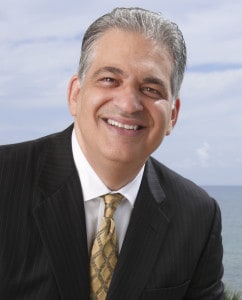 Bob Burg is a highly acclaimed speaker and an international bestselling author of books such as Endless Referrals and The Go Giver. He’s one of the world’s authorities in relationship marketing. Through his dynamic Endless Referrals system, Ultimate Influence and Go-Giver principles, Bob teaches business professionals how to leverage their network of everyday contacts into a never ending stream of new prospects.
Books Mentioned
- How to Win Friends & Influence People
- Think and Grow Rich: The Landmark Bestseller Now Revised and Updated for the 21st Century (Think and Grow Rich Series)
- The Magic of Thinking Big
- Psycho-Cybernetics, A New Way to Get More Living Out of Life
- The Secret of Selling Anything
- The Go-Giver, Expanded Edition: A Little Story About a Powerful Business Idea
- Endless Referrals, Third Edition
Resources Mentioned
Related Podcast Episodes
- 001. Neil Patel on how to make better decisions around client selection, branding and investing
- 011. Dan Norris on how to start your own startup (Part 1)
- 028. Dan Dobos on how to use pull selling to grow your business
- 048. John Logar on how to use high value consulting to increase profitability
- 050. James Schramko on frameworks for business profitability and lifestyle
- 052. Kyle Tully on specific mindset techniques to 10X your prices
- 055. Ezra Firestone on how to use ecommerce to take your business from six figures to seven
Key Points (Timestamps)
00:42— Intro and overview01:25 — The Go-Giver Principles, explained by Bob Burg
02:09 — People buy only because of what’s in it for them.
02:57— Content marketing is all about delivering consistent value to the audience.
03:36 — Bob Burg explains the Know, Like and Trust relationship and how it applies to content marketing.
04:09 — How NOT to do content marketing and how NOT to be a spammer
04:40 — The marketplace decides who they do business with.
05:35 — “Money is simply an echo of value.” — Bob Burg
07:14 — Bob Burg explains what selling is all about.
10:32 — The Law of Authenticity
11:23 — The most common challenges on getting started with implementing the Go-Giver principle into business and life
12:43 — “Great leadership is never about the leader, great influence is never about the influencer, and great salesmanship is never about the salesperson.” — Bob Burg
14:20 — ”You can have everything in life you want, if you will just help enough other people get what they want.” – Zig Ziglar
15:06 — Don’t be focused on the notion of lack but rather focus on the notion of abundance.
16:17 — Action steps are what a listener can take to improve sales techniques and implement the Go-Giver principle.
17:21 — The “Go-Giver”, “Go-Getter” and the “Go-Taker”, explained beautifully by Bob Burg
19:22 — Why it’s critical to ask your customers why they’re buying from you
20:46 — “When you sell on price, you’re a commodity. When you sell on value, you’re a resource.” – Bob Burg
21:48 — A metaphor for value in a story about a high-end restaurant
22:47 — “In a free market-based exchange, there are always at least 2 profits: the buyer profit and the seller profit.” — Bob Burg
23:04 — Books that have had the biggest impact on Bob Burg and why
25:34 — How to find out more about Bob Burg
Transcript
Machine transcript, lightly edited for reading. Speakers aren't marked. The intros and closing summary are left out.
Welcome, everyone. Today's guest is a highly acclaimed speaker and the international best-selling author of books such as Endless Referrals and The Go-Giver.
He's one of the world's leading authorities in relationship marketing. Through his dynamic, Endless Referrals system, Ultimate Influence and Go-Giver principles, he teaches business professionals how to leverage their network of everyday contacts into a never-ending stream of new prospects.
Today, I'm delighted to welcome Bob Burg, the founder of burg.com. Welcome, Bob.
Hi, Ash. It's so great to be with you.
Thanks for having me on your show. Pleasure to have you, Bob.
It's truly a pleasure. Could you talk to us a little bit about the Go-Giver principles and why you think they're so important in business today?
Well, the Go-Giver principles themselves are based on a very, very basic premise, Ash, and that is shifting your focus. And this is really the key, shifting your focus from getting to giving.
And when we say giving in this context, we simply mean constantly and consistently providing value to others. And that doing so is not only a nice way to live life and conduct business, it's actually a very financially profitable way to do business as well.
Absolutely. Because, sure, the way we do business, most of us, people are not forced to buy from us.
They don't have to do business with us. And whenever I speak at sales conferences, I'll often say to the audience, nobody's going to buy from you or from me because you need the money or I need the money or we want them to buy or we think our product is great.
No, they're going to buy from us because they believe it's in their best interests to do so. And that's the only reason why they should buy from us or buy from anyone.
What the Go-Giver philosophy methodology system, what have you, does is it allows us to take the focus off ourselves to move from an I focus or me focus to an other focus, understanding that incumbent upon us to bring value and be able to communicate that value to that other person. And that's the way business happens.
Absolutely. I couldn't agree more.
Content marketing is a topic that's very close to my heart and I talk about it a lot in this podcast. And that's exactly the same principle we use in content marketing.
It's about the audience. It's about your customer.
It's about delivering value first and making a significant lasting impact in their lives by delivering consistent and valuable content. And then eventually when it comes to the point of purchase, you're top of mind, you build a credible authority in your niche.
Yeah, you've built out what I call the know, like and trust relationship and they feel very confident doing business with you. And, you know, one of the things about content marketing is, of course, understanding that the value we bring to them, we need to make sure that it's value as they see it as being a value.
Because we can think what we're providing is value. But what are the things I always say is value is always in the eyes of the beholder.
Absolutely. And so it's so incumbent upon us to make sure we're giving them what they what they believe is of value.
And when we do that consistently, wow. Now, you know, we become that that go to person.
And this brings up a very important point, Bob, because there are so many people out there doing content marketing the wrong way. They're creating spammy emails, blog posts.
They're sending information. They're bombarding their audience with information that is of no use to their audience because they don't take the time to understand what specific problem they can solve with their content in their audience's life.
And they then get seen as spammers and they just end up losing reputation. You know, I mean, generally speaking, the marketplace is going to choose who they do business with the marketplace will decide.
And so if this content marketer is I focused, if everything they're doing is because they just want to make that sale, it's going to come across that way. Now, that's not to say making the sales right.
We need to have that sale take place. Of course we do.
Yeah. But we need to focus on them.
You can always tell those marketers who really what they're looking to do is grab your money. Yeah.
And again, they may have good information and they may provide something good, but we don't feel good about them. And we don't necessarily have that trust.
Whereas the ones who we know they're interested in bringing value to us and helping us solve our problems and so forth. Those are the ones that we are going to to do business with.
This is one reason why John David Mann, my awesome co-author of the Go-Giver series, he and I often say that money is simply an echo of value. I like it.
It's the yeah, it's the thunder to values lightning, which means nothing more than that. The focus must be on the value because that's what comes first.
So the value comes first and the money you receive is simply a very natural result of the value you provided. That's why that laser focus just needs to be on what the marketplace wants.
One of my old heroes, the late Harry Browne used to say that in a free market based economy. And when we say free market, we simply mean people have the right to exchange freely with one another.
No one's forced to do business with one another. And what he would always say is in a free market based economy, profit is simply the result of pleasing your customer.
Right. That's really beautifully put.
And by the way, I really like the idea or the term Go-Giver. That's something that really, really grabbed me.
It really encapsulates exactly what you're saying. So that's fantastic.
Thanks. So Bob, could you talk about the Go-Giver principles and how they're best harnessed in today's hyper connected world, which is filled with information overload.
Now, we already touched on that a little bit. We talked about how you understand what your audience wants and focus on solving their problems or being useful to your audience rather than thinking of yourself first.
But could you talk to us a little bit more about how you bring it to life in business? Sure.
Well, let's look at what selling is really all about, because so many people have a misguided notion or almost a backwards or upside down misperception regarding what selling is. See, many times people think of selling as being, first of all, as something you do to someone when actually selling is something you do with someone and for someone.
Great point. So we want to totally, yeah, reframe that.
But they also, they might see selling as trying to convince someone to buy something they don't want or need. And actually, that's not selling.
That's being a con artist. That is not selling.
Selling can simply be defined as discovering what the other person wants, needs, or desires and helping them to get it. It's a matter of matching the benefits of your product or service with the wants, needs, desires of the other person.
So when we look at selling that way, we see that it's really something very righteous that we're doing. OK, so in terms of the Go-Giver in the interconnected world, it's in a sense, it's the same basic principle as it would be in the world we used to live in.
You know, you're still reaching out, you're finding people who might have an interest or need for what you sell and providing value to them. Now, I think the Internet makes it a lot easier.
But, you know, I have a saying in law number three, when we talk about the law of influence, Sam, one of the mentors in the story, because it's a, you know, The Go-Giver is a short business parable. And one of the characters, one of the mentors, Sam, tells the main protege, Joe, that the golden rule of business is simply that all things being equal, people will do business with and refer business to those people they know, like, and trust.
Right. And there's no faster, more powerful or more effective way to elicit those feelings toward you from others than by, again, looking out for their best.
You're watching their back, as we say, looking out for their best interest, making their life better, easier, more enjoyable, or however you bring value to the equation. But here's the thing, people don't do business with or refer business to those computers they know, like, and trust.
Okay, again, it's not about the computer. It's not about Twitter or LinkedIn or Facebook or Instagram.
Those are all great media. I'm on many of them and have a large presence on them, and they help me add value to others.
But that's not what it's about. So it still comes down to always asking yourself that question, you know, how do I find a way to provide value to others and communicate that value to others in a way that they understand it and appreciate it?
Very important distinction you just made there, Bob, because so many of us confuse the means for the end. So, you know, Twitter, Facebook, we think that by being more prominent on Twitter and Facebook, we are more likely to make sales.
But the point is, if we are presenting the wrong image of ourselves, if we're not being our authentic selves, if the message and the person is the wrong message or the wrong person, then it doesn't matter how much you're on Twitter. You're not going to actually grow your business.
That's a great point. And number four, the law of authenticity and The Go-Giver says the most valuable gift you have to offer is yourself.
And one fantastic point you just made is when it comes to social media, it's even easier for people to tell when you're, I guess, the Latin term would be phonus balonus, right? So you can't really get away with it for too long on social media, which is great.
You know, I love that. It's a double-edged sword, right?
I mean, it just amplifies whatever you're putting out there. You are.
Exactly. Yes.
You need to be conscious and aware of what you're bringing to the table rather than just trying to foist a sale onto someone. If someone doesn't feel like you're going to add value to their business or their life, it's sensible to walk away from the transaction rather than try and push it and try and convert someone who doesn't want your service or product.
Absolutely. Okay.
So what are the most common challenges you've noticed, Bob, when it comes to getting started with the Go-Giver principles and what's worked best with overcoming them? Well, I think if there's any challenge, it's just that when people are in many ways, we receive messages from the world, okay?
Whether it's a combination of upbringing, environment, schooling, news media, television, movies, we get this message from the universe that if you make a lot of money, you must have done something wrong or bad to somebody, right? And typically, that's not the case, especially the more free market-based an economy is where people buy from one another, the more that you can only do well because you're pleasing others and touching the lives of many people with your exceptional value.
But that's not what sells in the media. The headline, Corporate CEO Treats People Fairly, it just doesn't sell.
It doesn't sell advertising. So a lot of times, and then you hear these things about you've got to be ruthless and you've got to be this and you've got to be...
And of course, that's not how it usually is. There's a lot of people in the world and there's people who do bad things.
But by and large, you find that that which doesn't make the news is what it usually is. And the leaders, you know, great leadership is never about the leader.
Great influence is never about the influencer. And great salesmanship is never about the salesperson.
It's always about the other person, about those people whose lives you choose to touch. But we don't necessarily know that.
So if you're brought up in that world of the dog-eat-dog kind of thing, which is... I don't know if they have that saying in the land down under, but that's a saying here where...
And so you don't know. So you see something like, Well, the Go-Giver.
Well, that sounds kind of soft and nice and fluffy. No, it's not.
It's not. The Go-Giver simply means you're focused on giving value to others, to the marketplace, to the individual.
And that that's a great way to do business. So the hardest thing might be for those people who are stuck in the old paradigm of dog-eat-dog, you've got to...
Well, not you've got to. They've got to understand that there might be a better way to do things.
And if you were to ask that person, the way you're doing it now, clawing your way and stepping on others and knocking others down to get... How's that working for you?
When you're in sales and you're just trying to get someone's money, how's that working for you? And if they say, Well, it's working fine, well, then they're not ready to change.
So they're not going to adopt another way. But fortunately, most people I think more and more are learning than they're being taught that the way you achieve success in all the areas in which success can be measured, including financial, that you don't get successful by knocking others down, but rather by building others up.
It's that old saying by the great late Zig Ziglar, You can have everything in life you want if you'll just help enough other people get what they want. And that's true.
That absolutely is true. And so once somebody's ready to adopt that, that's fine.
There's not an issue. And as far as there being a challenge, well, the neat thing is the laws are very simple.
And we wanted to make it simple so that anyone could do it. And we love getting the emails from people saying that once they just shifted their focus and they followed the five laws, the laws of value, compensation, influence, authenticity and receptivity, it allowed them to see that so long as their focus is on providing value to the marketplace, they're creating the environment of really living a life of abundance.
Great point. So there's another shift we're talking about here.
So the first shift we talked about was moving from being self-focused to other focus. Now we're saying another important shift to make, especially in the highly visible online environment, is to not be so focused on this notion that people have of this dog-eat-dog situation, but rather to just think more of the world being a place of abundance and growing and helping others grow.
And then that's how you grow in the process. Yes.
And please understand, and this is so important, there's nothing about being a Go-Giver that says that you should be anyone's doormat, that you should be a martyr or that you should be self-sacrificial. Absolutely not.
It's nothing about that that says it. It's simply a way of doing business, understanding that to the degree that you focus on bringing value to others, you're going to be rewarded for that.
Every time and in every case, no, but that's not how the world works. But most of the time and the percentage of the time that is going to make it so that you live very abundantly, very prosperous.
Sure. Sounds great.
So let's talk about some actions then that a listener can take to get started today. One action that comes to mind straight away is change your perspective.
Don't see the world as a place of lack or don't see things as being so constrained. Just believe that if you provide enough value, if you focus on creating abundance, you're more likely to see abundance in your life.
Be aware of the fact that it's about the customer, the audience, about the value you give first before you receive. And the value you receive is just a byproduct of the value you give.
So these are two clear mental actions a listener can take to start implementing these Go-Giver principles. Are there any other actions you recommend?
Well, I mean, I think it's like Joe in the story. If you recall the one condition for mentorship that Pindar, the main mentor, gave him was that he had to take each of the laws and apply them that night.
Yes. Apply each law that night before he went to sleep.
Why? Because action is important.
Yes. This kind of goes back to when we say, you know, the Go-Giver, a lot of people think, well, the opposite of a Go-Giver is a go-getter.
No, no, not at all. A go-getter is a person of action.
We want people to be go-getters and go-givers. What we don't want is for people to be go-takers.
Oh, that's a great point. That's the person who has the take, right?
And so be a go-getter to start to ask yourself, how do I value to others? How can I best provide value to others?
Can I go to some of my loyal clients, the clients who already love me and trust me and ask them, what is it about me or our product or service or the way the customer experience that has you doing business? Now, that's a great suggestion.
Yeah. Well, and here's what happens, Ash.
They give us reasons that we don't even realize. Yes.
Because remember, as human beings, we all see the world from our own perspective, our own belief system. And what we find valuable isn't necessarily what they find valuable.
Right. And so they give us a totally different perspective and we can use that to help please others in the marketplace.
So it makes it so that we can ask questions of people because, you know, the way you find out what the other person does need, want or desire is what you ask questions. Well, when we know there are a number of reasons why people might see value in our product or service or customer experience that we don't currently know, now it gives us a whole wider range of questions to be able to ask in order to figure it out.
So that's one step you can take. That's such a great point.
I was talking to a person called Kyle Tully in a previous episode and we were talking about price and how to increase prices in business. And he said that price, most people don't realize it's just one of the many factors that a person uses to make a decision.
Very often they decide to buy from you not because you're the cheapest, but because you're easily accessible or because you're someone they know, like and trust or you're someone who has authenticity. And so I think it's such a good point you make about asking your audience that is already buying from you or your customers.
What made you buy from me? Because you might think that the reason people are buying from me is because I'm the most price competitive.
Or you might think that the reason people are buying from me is because I am the most skilled at this particular product or service. But the truth is they might be buying from you because you're just somebody who they like and somebody who they trust and somebody who has made a difference to their lives and was there when they needed you.
Yeah, this is so key. And his name was Kyle, you say.
Kyle Tully. He made a great point.
Yeah, he made a fantastic point. I often say that price is simply a dollar figure, it's a dollar amount, it's finite, it is what it is.
Value, on the other hand, can be defined as the relative worth or desirability of something, of a thing to the end user or beholder. And it's often, as he said, much more than just price.
It could be a number of things. Price is often the least important, other than the very rare group of people who are totally price buyers.
And that's probably not your target market anyway. Exactly.
Also, we understand that unless your name is Walmart, trying to make low price, your unique selling proposition is not a good idea. You're going to race to the bottom, especially in the online world today.
It's a race to the bottom, yeah. And so when you sell on price, you're a commodity.
Yes. When you sell on value, you're a resource.
I love it. So rather than selling on low price, we want you to sell on high value, which brings with it a higher price.
I'm going to say that back because that's so good. When you sell on price, you're a commodity.
When you sell on value, you're a resource. That's excellent.
That's a tweetable right there. Thank you.
So, Bob, another thing I wanted to just mention in this conversation is that Warren Buffett put it really well. He said price is what you pay and value is what you get.
And I really like how he put that because price is just one factor, as you said, but value is the difference it makes to your life. The value that you get from a product could be a hundred times the price.
It could be a million times the price, or it could be a fifth of the price. And law number one, the law of value says to give more in value than you take in payment.
What does that mean? I mean, that sounds like a recipe for bankruptcy, but of course it's not when you understand the difference between price and value.
Yes. In the story, we use the example of Iafrata's Italian Cafe.
It's a high-end restaurant in a swanky part of the village. Now, when you eat there, you're going to pay a high price.
Okay. But you feel so great about the experience from the time you walk in and the doors are open for you and how you're greeted and how you're led over to Sal, who seats you like VIP, and the waiters know exactly when to pay attention and when to leave you alone to enjoy.
The food is exquisite. It's served wonderfully.
The ambiance is fantastic. So you may pay a couple hundred dollars for the meal, but you come away from it with thousands of dollars of value in the experience.
And you feel great about it. Now, and of course, Iafrata, the owner, well, his costs of everything, of keeping his doors open, of the food, of the staff, is certainly less than what he charges.
Sure. So he makes a profit as well.
In fact, in a free market-based exchange, there are always at least two profits, the buyer profits and the seller profits. I like that.
That's great. And that's how you expand and why abundance happens.
That's excellent. Jeez, you're knocking those tweetables out like crazy, Bob.
That's another one right there. Thank you.
Bob, can you talk to us about the books that have had the biggest impact on you and why? There are so many.
There are so many, starting with some of the classics, such as How to Win Friends and Influence People. I love that book.
Think and Grow Rich by Napoleon Hill. The Magic of Thinking Big by Dr David Schwartz.
There's a book from 1960 called Psycho-Cybernetics. Yes, I've read that too.
Maxwell Maltz. Oh, great, great books.
Excellent book. One of my favorites was The Secret of Selling Anything.
It was published posthumously. It was written in the 1960s by Harry Browne, who, and in this book, I do a blog post on this book at burg.com/blog.
If you go to The Secret of Selling Anything, if you do a search, it will come up with the basic premise of his book. And what I love about this, first of all, he is the kind of person who just absolutely, respected the sales process, respected the other person.
He's the one who said, you know, the focus has to be on them because it's all over. He's the one that said that in a free market-based economy, profit is simply the result of pleasing the other person.
And the first half of the book, because it's actually taken from two manuscripts, the first part of the book is simply understanding human nature. Wow.
And why people do what they do and act as they act. And when you respect human nature rather than trying to change it, you're able to tap into what the other person wants.
And he does it in such a soft sell, respectful way. And then the other part is just his sort of five-step process of any sale.
And again, it was written in the 1960s, so the language is a little outdated. But boy, it is such a fantastic book.
You know, there are many books I have in my bookshelves, a number of books on leadership. I just love reading about leadership and studying it, sales, free market economics and spiritual.
So there's so many books that have touched my life in a significant way. It's hard to even think of names because I don't want to leave out the hundreds of others.
I see what you mean. Well, you've given us some great ones and I certainly really enjoy it, how to win friends and influence people.
It's an oldie but a goodie, you know, it's a fantastic book. And I want to read, I haven't read Think and Grow Rich yet, but I definitely want to read that one.
I've read Psycho-Cybernetics and I really enjoyed that book too, so great stuff. Could you tell us how listeners can find out more about you and is there anything I should have asked you that I haven't asked or you'd like to add before we say goodbye?
No, you've been great. This has been a lot of fun.
You've asked terrific questions. Anyone who wants to find out more can visit burg, B-U-R-G dot com.
At that site, they can subscribe to my influence and success insights. They can get chapter one of The Go-Giver and some of my other books.
They can take a look at the blog and connect with me on all the social media. It's pretty much all at the, right on the homepage.
Well, I'll be sure to include all the links in the show notes of this podcast. So it'll all be there.
And when the podcast is published, I'll share all the details with you. Fantastic.
I appreciate that, Ash. Thanks for being on.
Thank you so much for having me. I appreciate you.
Bye, Bob.